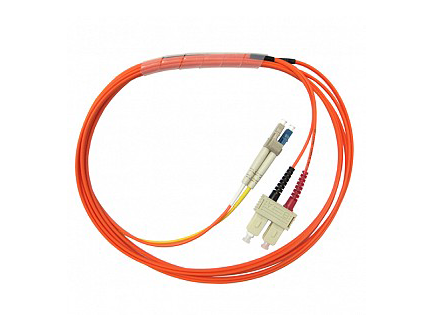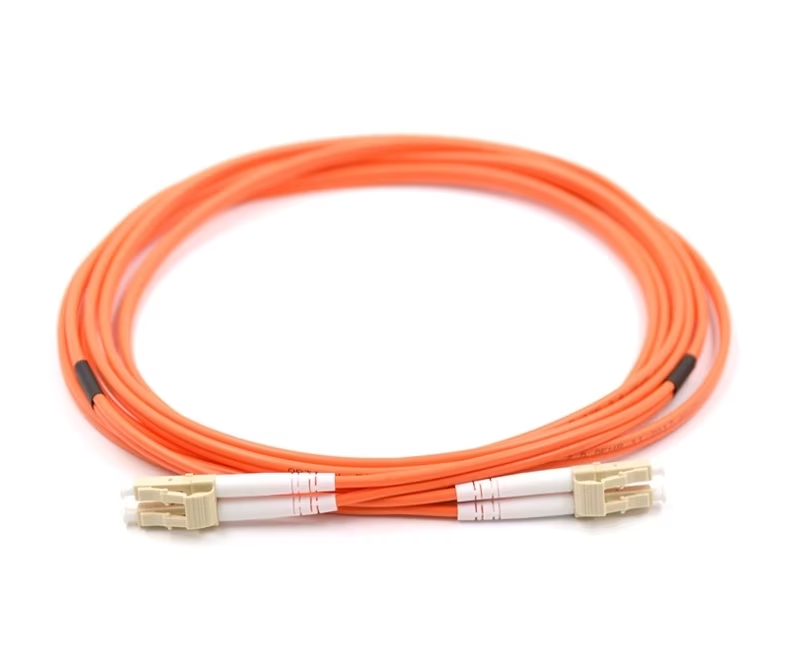
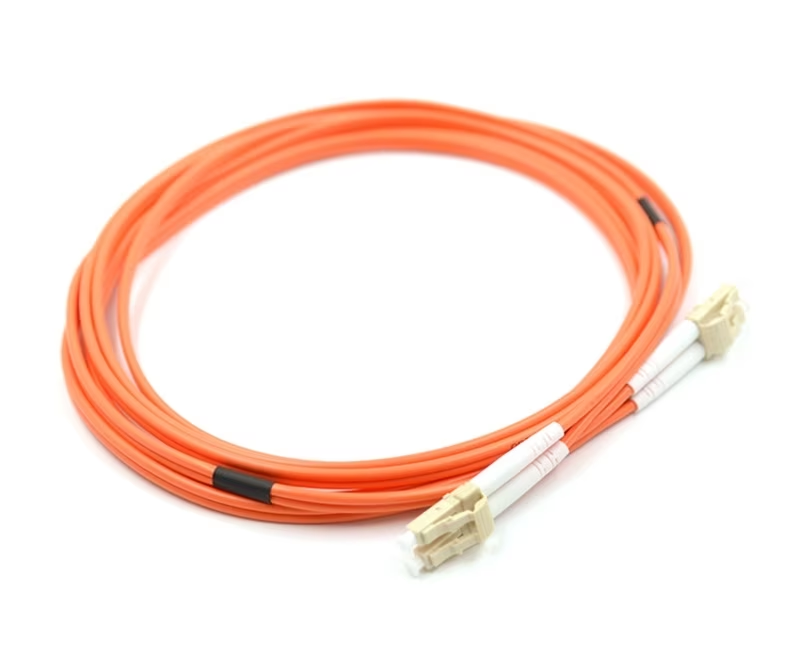
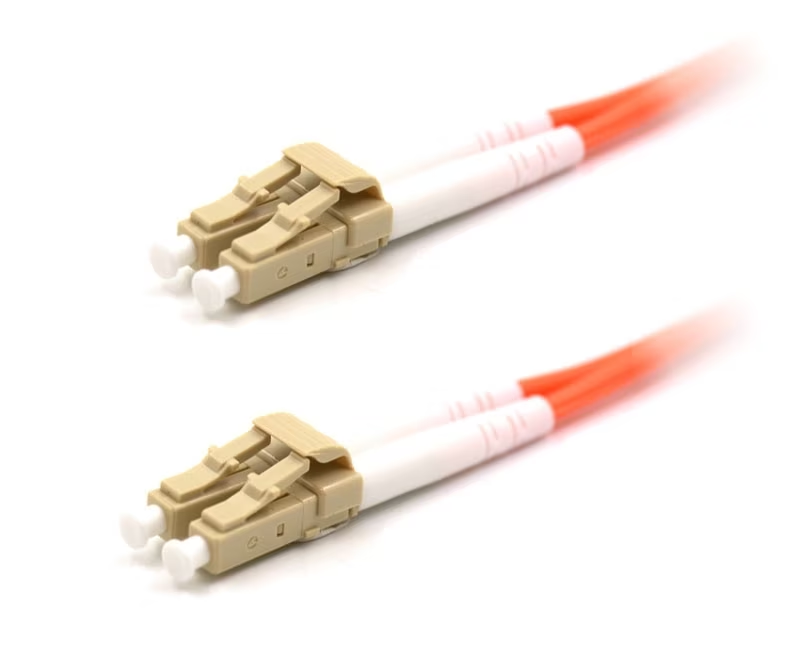
LC/UPC to LC/UPC Armored Duplex Fiber Optic Patch Cable - 62.5/125µm Multimode OM1 - 3mm Orange PVC Rated Jacket
**Lead times may apply. Please call or email us for current lead time and availability, before placing your order
Connector | LC/UPC |
Mode | 62.5/125µm Multimode OM1 |
Type | Duplex |



This patch cable is armored for maximum strength and durability without sacrificing flexibility or size. It is crush and rodent resistant without being bulky, heavy, or messy. This means that it can be used in hazardous areas where more rugged cable is required. Armored fiber optic patch cables are made with similar outer diameter to standard patch cables, making them both space saving and strong.
This armored fiber optic patch cable is a cost-effective solution that provides high bandwidth and transmission rates over short distances. This high-quality multimode fiber optic patch cable is designed for ethernet applications. Each connection has great durability and is resistant to pulls, strains, and impacts during installation.
Multimode Patch Cables have a larger diameter core than singlemode, allowing multiple modes of light to propagate. Due to the larger core diameter more data can be transmitted, however far more light refraction and attenuation takes place. This means that they are used over far shorter distances than singlemode cables, due to signal degradation. They are most found in short distance data applications such as LANs (Local Area Networks)
Features & Specifications
Crush and rodent resistant
Bend Radius of 30mm
100% Optically inspected and tested for insertion loss
Pull-Proof Jacket
Immune to electrical interference
ROHS Compliant
Connector Types: UPC - LC, SC, FC, ST, MTRJ1
Insertion Loss: 0.1dB (Typical), 0.3dB (Max)
Back Reflection: -25dB (UPC)
Operating Temperature: -20°C to +70°C
Simplex vs. Duplex
Simplex communications are sent in one direction. Simplex communications include typical residential internet, where a single line is used for downloading data while another is used for uploading data. Devices that are connected via Duplex can send data in both directions simultaneously. A good example of a duplex connection is your everyday telephone line, which allows for communications from both parties at the same time.